Goodbye 2025, Hello to Smarter 2026!


2025 disappeared faster than a KSRTC bus just as you start running toward the stop. This year was a whirlwind of new AI tools, unexpected challenges, and late-night debugging marathons. At some point my browser history became a museum of panic learning:

  • “RAG tutorial”,
  • “Vector DB explained”,
  • “GPT vs Claude vs Grok vs Gemini”
  • “How to reduce token cost”

And yet… 2025 became the most transformative, fulfilling, and downright proud year of my 23 year-long career.

My 23 Year Journey Through the Evolution of Software (So Far)

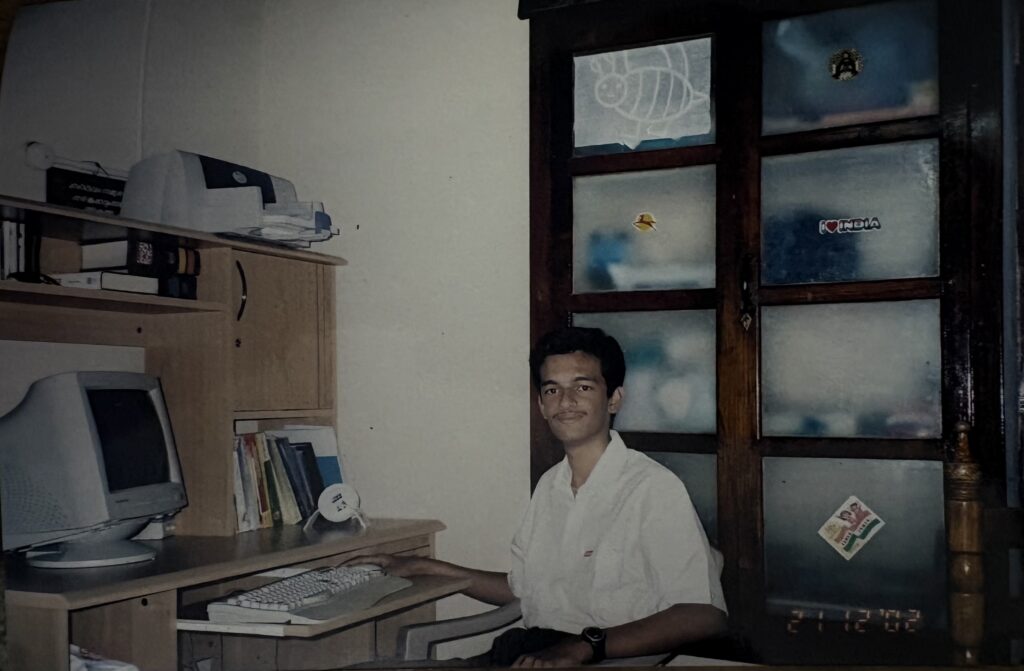
My journey began 23 years ago with command-based programs and blue screens in FoxPro. Writing “Hello World” without any architecture felt like launching India’s next satellite, and floppy disks were my cloud storage. Somewhere in my archives is a photo from 2002 of me working on a command-based FoxPro application on a 150 MHz system. That machine had less power than today’s smartwatches, but it sparked a journey that shaped everything that followed.
Then came Windows apps, then web apps, all wrapped inside monolithic architectures. Later microservices arrived and changed everything.

And just when I thought I had seen it all…
2025 dropped the atomic bomb called AI-native architecture like:

  • RAG architecture
  • Vector DB architecture
  • MCP architecture
  • GenAI workflows
  • Agent-driven designs etc. many architectures.!

I’ll admit it that I never started as an AI fan.
But technology kept tapping my shoulder saying, “Boss… please update yourself.”
So instead of ignoring AI, I decided to embrace it, learn it, and make it part of my toolbox and not my competitor.

A storm of learning: How AI reshaped 2025

2025 felt like a Kerala monsoon, heavy, surprising, sometimes overwhelming, but ultimately refreshing.

AI became a daily companion at work. Models like Banana Nano, Google Veo, and OpenAI’s Sora 2 surged in popularity. MCP quietly changed how AI integrates with real world tools. New releases arrived so quickly that learning itself became a full time pursuit.

At the same time, AI’s ability to create images and videos with near perfect realism was both exciting and unsettling. What once required studios, equipment, and teams could now be generated in minutes. Creativity was democratized, but so was the potential for misuse. As the line between real and synthetic continued to blur, trust, authenticity, and responsibility became as important as innovation itself.

Looks real!?!

The video above looks real! does it not? It is an AI generated (by Grok image) clip placing people like me alongside public figures such as Elon Musk, realistic enough to fool the eye. Impressive and exciting but also a reminder of how easily trust can be blurred.

This acceleration did not merely speed up development. It fundamentally redefined what it means to be a developer.

By 2026, nearly 90% of all code is expected to be AI generated. The industry expanded from approximately 250 billion lines of code in 2024 to almost 650 billion in 2025, not because humans typed faster, but because machines began carrying the bulk of implementation.

Then the shift became personal.

Midway through the year, while writing yet another API, I paused and asked myself, “Why am I doing this manually when intelligence can do it better?” GitHub Copilot could generate the same functionality in 10 seconds, complete with tests and documentation. I deleted 3500 lines of code, provided a prompt, and received 7000 lines of clean, production ready output.

That was the moment everything became clear.

We are not being replaced. We are being upgraded.

From code executors to intelligence orchestrators
From syntax writers to system designers
From implementers to decision makers

That single question, Why am I writing this when AI can do it faster, marked the true turning point. The role of developers is changing forever.

The future does not need more people who can write code. It needs people who understand what should be built and why.

2026 Predictor: How AI is reshaping work and developers

2026 is not just another year of new tools. It is shaping up to be a turning point for both technology and the people who build it. The way we develop software, the roles we take, and the skills we rely on are all about to change significantly.

One of the biggest shifts will be the rise of specialized AI models trained on deep domain knowledge in areas such as finance, healthcare, education, law, and manufacturing. These models will understand compliance requirements, workflows, regulations, and business rules far better than today’s general-purpose AI systems.

We will see more on-premise and hybrid AI models that organizations can fine-tune securely using their own data. Regulation focused AI systems for finance and healthcare will become essential, driven by evolving laws and standards that demand transparency, bias mitigation, and accountability. Task-level AI agents will analyze documents, execute multi-step workflows, and deliver domain-accurate results with fewer hallucinations. Multi-agent systems will become more common, allowing specialized agents to collaborate on complex tasks much like human teams.

Another clear shift in 2026 will be companies investing heavily in AI hardware for local LLMs. Instead of sending sensitive data to public cloud models, more organizations will run AI on their own servers, edge devices, or private clusters. This shift is driven by security, privacy, compliance, latency, and cost control. Local and on-premise LLMs will become standard for enterprises handling confidential data, making AI adoption safer and more practical for real-world business use.

Alongside these technical advances, developer roles will evolve dramatically.

By 2026, nearly 90% of all code may be generated by AI. Junior developer roles may shrink or transform, while entry-level developers will be expected to demonstrate AI-assisted productivity from the first day. New roles will emerge, such as AI code auditors who review and validate AI-generated output, and specialists focused on prompt engineering, agent orchestration, and system guidance.

Developers will shift from typing code to orchestrating, guiding, designing, and reviewing systems. They will become more like architects than bricklayers, and more like problem designers than syntax writers.

For developers, this shift is not only a challenge but also a clear advantage. AI removes much of the repetitive and mechanical work that once consumed engineering time and replaces it with higher-impact responsibilities. Developers gain greater influence over system design, quality, and outcomes, allowing smaller teams to deliver faster while focusing on decisions that truly matter.

So the real question is not whether AI will replace developers. That transition has already begun. The real question is what kind of developer you want to be when AI writes most of the code.

Those who thrive will master the remaining ten percent, the part AI still cannot replace: judgment, creativity, domain expertise, business understanding, and human connection.

For developers looking ahead, the advice is simple. Do not compete with AI on speed or volume. Focus instead on judgment, system thinking, and understanding the real problem behind the code. Use AI as a daily partner, but remain accountable for outcomes. Review what it produces, question assumptions, and own the final decisions.

Treat AI as infrastructure, not as magic. Let it amplify your abilities while you guide direction and ensure ethical, secure, and compliant results. Build expertise in orchestrating multi-agent workflows, validating outputs at scale, and integrating domain-specific models. Stay current with regulatory changes in your industry, as compliance will increasingly shape how AI is deployed.

Embrace continuous learning. Experiment with new tools, contribute to open repositories, and collaborate across disciplines. The developers who adapt will not just survive. They will lead the next wave of innovation, turning AI into a force multiplier for human ingenuity.

In 2026 and beyond, the future belongs to those who partner effectively with AI and elevate their role from coder to strategic architect of intelligent systems.

And yes, even everyday appliances may feel the impact. Your fridge in 2026 might message you saying that the milk is finished and asking you to buy more before your chai suffers. Or, in true Malayalee style, it might simply say, “Da, milk poyi. Before Amma scolds, go buy it now“.

A Proud Moment in 2025:

  1. Showcasing SmartQueryChatBot

One of the highlights of this year was presenting SmartQueryChatBot at NeST Tech Fest 2025 (Feb 2025).

At first glance, it was just a small chat box. In practice, it was surprisingly powerful. Users could type in natural language, and the system would automatically perform CRUD operations without writing a single query. No complex UI. Just intelligence.

It felt like blending the roots of traditional databases with modern AI creativity, and standing there presenting it was a moment of genuine pride.

  1. Building Our Own PR Review Assistant for Azure DevOps

GitHub had Copilot PR Review.
Azure DevOps TFS did not.

So I built our own AI-powered PR review assistant.

It reviews code, highlights potential issues, suggests improvements, and significantly reduces the time spent on manual code reviews. More importantly, it fits directly into our existing Azure DevOps workflow.

This project reinforced a key lesson for me: AI delivers the most value when it is applied to real team pain points, not as a showcase, but as a practical productivity multiplier.

  1. Improving AI Efficiency with a NuGet Plugin

I also published a personal NuGet package called vTSafeKernelInvoker.

By default, Semantic Kernel sends plugin results back to the AI model for additional formatting, which unnecessarily consumes tokens. This plugin bypasses that step, returning results directly.

The result is lower token usage, faster execution, and reduced cost for AI-heavy applications.

NuGet package link:
https://www.nuget.org/packages/vTSafeKernelInvoker

It is a small utility, but one that makes a meaningful difference when scaled across real-world systems.

Exciting Technologies Emerging in 2026

Outside AI, the world is gearing up for breakthroughs such as:

  • Structural Battery Composites : batteries built into the structure itself.
  • AR Glasses: slowly replacing traditional screens.
  • AI-Native Operating Systems: where AI becomes part of the OS core.
  • Edge AI Chips: running powerful AI offline.
  • Smart Infrastructure & IoT 2.0: intelligent automation in homes and cities.
  • Low-Code/No-Code tools: enabling anyone to build apps.
  • Quantum Communication: ultra-secure, light-speed data transfer.
  • Brain-Computer Interfaces: Neuralink-style direct brain-to-digital interaction.

2026 looks less like an upgrade and more like a complete reset.

What You Should Actually Learn in 2026

No fluff. No “learn blockchain” nonsense.
This is what will actually matter.

  1. Prompt engineering at scale
    Designing prompts with variables, chains, evaluation loops, and MCP integration.
  2. RAG architecture mastery
    Hybrid search, metadata filtering, chunking strategies, and retrieval evaluation.
  3. Vector database internals
    Understanding tradeoffs between PGVector, Pinecone, Qdrant, and Weaviate.
  4. MCP deep dive
    The future of reliable AI and tool integration.
  5. Agent patterns
    ReAct, Plan and Execute, Toolformer, reflection, and multi agent coordination.
  6. AI code auditing
    Reviewing, testing, securing, and productionizing AI generated output.
  7. Cost engineering
    Because tokens are the new rupees.
  8. Private and hybrid LLM deployment
    Ollama, vLLM, and Text Generation Inference for controlled environments.

And most importantly,
stay dangerously curious.

Further Reading from My Work in 2025

Many of the ideas and lessons shared here come from hands-on work and writing throughout 2025. I documented these learnings while building real systems, experimenting with AI in production, and solving day-to-day engineering problems. If you want to explore these topics in more depth, I have written the following articles on my blog:

These articles reflect real experiments, real constraints, and real decisions made while integrating AI into everyday engineering workflows.

Final Words

2025 did not just teach me new tools.
It taught me a new way to think.

It taught me that the best developers in 2026 will not be the fastest typists.
They will be the clearest thinkers.
The best architects.
The ones who can look at a problem and ask,
not “How do I code this?”
but “How do I design intelligence to solve this?”

So here’s to 2026.
The year we stop fearing AI.
The year we stop competing with AI.
The year we start leading it.

I am ready.
With more clarity.
More confidence.
And zero fear.

Because I no longer write all the code. I design the future!.

And the future?
It is looking pretty damn bright.

Still writing code at 1 AM.
Still eating Pizza.

Happy New year in advance!!!

Please follow and like us:
0

Leave a Reply

Your email address will not be published. Required fields are marked *